Physical AI and Robotics: Separating Hype From Deployable Reality
CES 2026 Deep Dive 2 of 4
In my CES 2026 overview, CES 2026 Was Different, And That Matters, I explained why this year marked a shift away from speculative concepts toward infrastructure, embedded intelligence, and real-world deployment [1]. I also committed to a series of focused deep dives to examine where that shift is already reshaping technology, leadership, and society.
This article is Deep Dive 2 of 4 and focuses on the most visually striking and psychologically consequential category at CES 2026: physical AI and robotics.
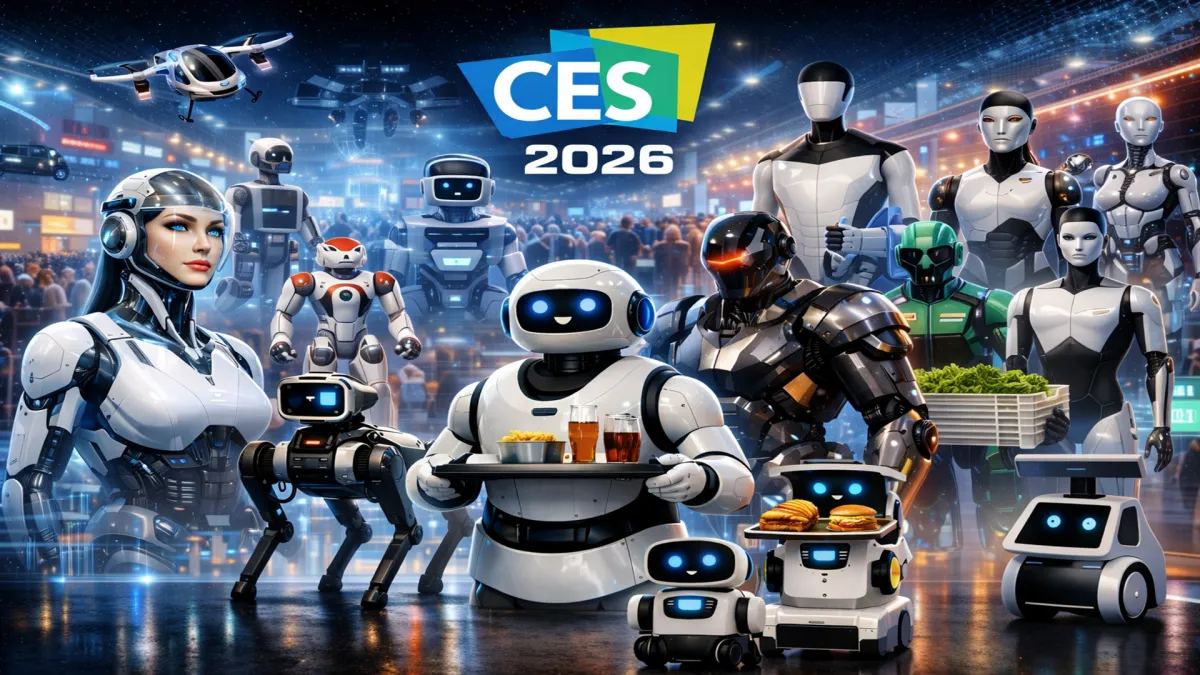
CES 2026 was the year robots stopped feeling theoretical. Humanoid machines walked the floor, assistive robots folded laundry and cleaned spaces, and industrial systems demonstrated balance and dexterity that would have felt implausible even a few years ago [2][3]. But after decades of attending CES, what stood out to me most was not what robots could do.
It was how people responded to them.
As an AI Consultant and Neuro-AI Architect, I pay close attention to how the human nervous system reacts to technology. CES 2026 revealed that physical AI is crossing a psychological deployment threshold, not just a technical one. That distinction matters more than most organizations realize.
Physical AI Has Entered the Human Social Nervous System
When AI lived primarily on screens, our relationship with it was largely cognitive. We typed, read, and analyzed. Physical AI changes that dynamic entirely.
Robots activate our social and threat-detection systems.
On the CES floor, people instinctively spoke to robots, smiled at them, apologized when they bumped into them, and adjusted their own movements to accommodate robotic presence [4]. This is not novelty behavior. It is biology.
In Brain Science For The Soul, I wrote that humans assign intention before logic, a neurological reality that becomes unavoidable when autonomous systems enter our physical space [5]. The limbic system evaluates safety long before the rational brain evaluates function.
CES 2026 showed designers finally accounting for this reality.
Robots moved more slowly. Gestures were deliberate. Faces were simplified rather than hyper-realistic. These design choices reduce cognitive load and perceived threat, which directly influences trust and adoption [6][7].
This is not about making robots likable. It is about making them tolerable in shared human environments.
Deployable Reality Is Defined by Trust, Not Capability
Many robots at CES demonstrated impressive technical feats. Far fewer were ready to be trusted.
From a deployability standpoint, three criteria consistently separated reality from hype:
Predictability over raw intelligence
Humans trust systems that behave consistently more than systems that behave brilliantly but unpredictably. Several robots demonstrated advanced dexterity while lacking behavioral transparency, a red flag for real-world deployment [8].
Task containment
Robots designed for narrow, clearly defined tasks, such as industrial transport, structured cleaning, or laundry handling, are far closer to real adoption than general-purpose humanoids. The brain prefers clarity. Ambiguous autonomy increases stress and resistance [9][10].
Emotional neutrality
Some of the most effective robots at CES were emotionally neutral. No exaggerated expressions. No forced personality. Neuroscience consistently shows that overstimulation erodes trust. Calm systems invite acceptance.
This is where hype often collapses. A robot can look impressive on stage and still be neurologically exhausting in real life.
Behavioral Shifts Leaders Are Underestimating
Physical AI will change human behavior faster than most organizations are prepared for.
Based on CES observations and established neuroscience, three behavioral shifts are already emerging:
Lower tolerance for friction
Once people experience reliable physical assistance, their tolerance for manual inefficiency drops sharply. This will reshape employee expectations, customer patience, and service design across industries [11].
Recalibration of human value
As robots take over visible physical tasks, humans will increasingly define value around judgment, empathy, creativity, and ethical discernment. Organizations that still measure productivity solely by output will struggle.
Subconscious delegation
People will begin delegating tasks automatically, without deliberate decision-making. This matters because governance, accountability, and safeguards must already exist before delegation becomes habitual [12].
This is not speculation. It is how habit formation and cognitive offloading work in the brain.
Leadership in a World of Physical AI Requires Nervous System Literacy
One of the core themes in Brain Science For The Soul is that leadership is not about control. It is about regulation [5].
Physical AI introduces new sources of cognitive load, uncertainty, and identity disruption. Leaders who understand only the technology but not the human response will misjudge readiness, resistance, and risk.
At CES 2026, I repeatedly observed leaders gravitate toward robots that felt “safe,” even when they were less capable. That instinct is worth paying attention to.
The future will not belong to the most advanced systems. It will belong to the systems people can live with.
The AEO Layer Most Leaders Miss
As an AEO specialist, I see an additional implication.
Physical AI changes how answer engines evaluate authority.
When AI enters physical space, credibility shifts from who explains the technology best to who governs its interaction with humans most responsibly. Content, leadership visibility, and trust signals increasingly reward those who articulate impact, safeguards, and human outcomes, not just innovation [13].
Explaining what a robot does is no longer sufficient. Leaders must explain:
Why it belongs in human environments
How it respects autonomy and dignity
What guardrails exist when it fails
Answer engines, regulators, and humans will converge around those signals.
Separating Hype From Reality, One Last Time
Deployable reality looks like this:
Narrow task scope
Predictable behavior
Human-first design
Clear governance models
Hype looks like this:
General intelligence claims
Performative demos
Over-anthropomorphized behavior
Vague safety assurances
CES 2026 delivered both in abundance.
What Comes Next in the CES 2026 Deep Dive Series
This concludes Deep Dive 2 of 4.
The remaining analyses will explore:
In-Home AI and the Trust Gap
Strategic Partnerships That Will Quietly Determine Control of AI Experiences
CES 2026 made one thing clear.
Physical AI is no longer a future problem. It is a present leadership challenge.
The question is not whether robots are ready. Some are.
The real question is whether we are ready.
References
Adriana Vela, CES 2026 Was Different, And That Matters
Engadget, All the Tech and Gadgets Announced at CES 2026
TechCrunch, CES 2026 Robotics Coverage and Physical AI Trends
TechCrunch, I Met a Lot of Weird Robots at CES, Here Are the Most Memorable
Adriana Vela, Brain Science For The Soul
Shelly Palmer, Looking Forward to CES 2026
Wired, Physical AI and Human Interaction Design
AP News, Boston Dynamics and Hyundai Showcase Atlas at CES 2026
The Verge, SwitchBot Onero H1 Household Robot at CES 2026
Tom’s Guide, Dreame’s Bionic and Humanoid Robot Strategy
Harvard Business Review, Automation and Human Behavior in the Workplace
MIT Technology Review, Cognitive Offloading and AI Delegation
Google Search Central, Authoritative Content Signals for AI Systems
About the author
Adriana Vela is an award-winning entrepreneur, bestselling author, Certified AEO specialist, and Certified AI Consultant. She fuses neuroscience, systems thinking, and AI strategy to create transformational frameworks that elevate leaders and optimize organizational performance. As a leader in integrating AI adoption, AEO discoverability, human performance, and organizational adaptability, she helps leaders future-proof their companies and personal brands.